Car Seat Types Click each seat for more information
Travel System
Travel System
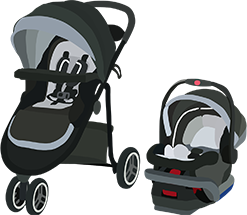
A travel system is a bundle that typically consists of a stroller, infant carrier and carrier base. The base is mounted into the car, and allows for the infant carrier to quickly be inserted and removed without needing the child to be unstrapped from the harness. In most cases, the carrier can also be quickly attached and removed from the stroller.
It is a great option for expectant parents of a first child, as it is a single purchase that handles the majority of an infant’s transportation needs. Additional bases can be purchased individually for use in other cars. If money is a concern, infant carriers are also designed to be installed without a base.
Infant Carrier
Infant Carrier
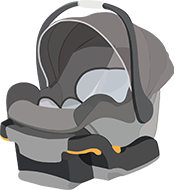
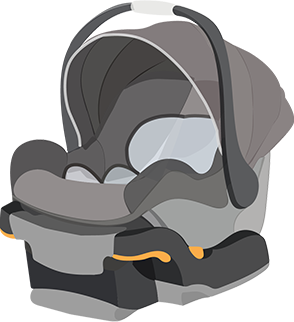
Infant carriers are great options for children under the age of two. They are designed to be easily installed and removed from the car with the child in the seat. This allows the parent to secure them in the seat outside of the car, making it much easier.
Infant carriers can be installed with just the car’s seat belt or with an optional base. Additional bases can be purchased individually for use in other cars. If money is a concern, some infant carriers are also sold without a base.
When not in the car, the carrier can be used to keep the child comfortable and secure running errands or while dining.
Convertible
Convertible
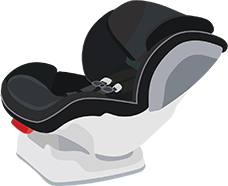
Convertible car seats are designed to fit children from birth until about 6 years old. They can be installed rear-facing for younger children and then turned to forward-facing as the child grows. They are meant to be long lasting and often have features such as a headrest and padding that is adjusted to grow with the child.
Some convertible seats are even able to be used as belt positioning boosters for when a child is too large for the 5-point harness, extending the use past age 6. These ones are marketed as “All-in-one” seats and can protect a child until they are big enough to use the car’s seat belt without a child seat.
Combination
Combination
Combination seats are for children about 4 years old and up. They are forward facing seats that offer a 5-point harness until the child is big enough to use the seat belt. At that point, the car seat belt routes on the seat, ensuring the child is protected.
Booster
Booster
Booster seats are for children that have outgrown 5-point harness seats but aren’t yet big enough for the seat belt alone. They are designed to raise the child up and ensure the belt is routed in across the pelvis. Children that stop using a booster too soon risk serious damage to internal organs if the seat belt is on their stomach.
Hide a seat style to prevent it from showing in the Seat Finder results
Helpful InformationClick each icon for more information
Carrier Base
Lower Anchors
Installation
Tethers
Harness
Mirrors & Accessories
Seat Incline
Rear vs Forward Facing
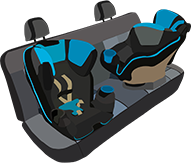
Seat Mats
Car Seat FinderClick the categories for more information
Enter your child’s information
Enter your child’s information
years
months
feet
inches
pounds
Age
Not all car seats specify the age limits, but children’s bodies develop as they age. Children under the age of 2 don’t have strong enough neck muscles to be safe in a forward facing car crash. Older children’s hips aren’t big enough to have the seat belt in the correct position without a booster seat.
Additionally, there are many laws that vary from state to state that govern what type of seat that a child is required to be in, often specific to age. Those details can be found here: https://saferide4kids.com/car-seat-laws-by-state/
If a car seat doesn’t specify the age limits, it is still safe to use the height and weight ranges.
Height
A child that is too short for the listed limits on the car seat might not stay within the harnesses during a crash. A child that is too tall can hit their head during a crash, because their head is above the top of the seat.
Make sure to use a seat that fits the size of your child. If it has an adjustable head rest, make sure to keep it at the appropriate height for your child. The instruction manual will have the details of how to adjust it and where it should be placed.
Weight
Car seats are tested to the maximum limits of the weight range with crash test dummies. If a child weighs more than the listed maximum, the seat might not be strong enough to keep the child safe.
Do not use a car seat if your child has outgrown the limits!
Seat Mats
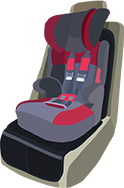
Children are messy and seat mats are an option that can help protect your car’s interior. However, manufacturers cannot test all seat mats with all car seats. There is a risk in using them. It is possible that they might prevent the child’s seat from working properly in a crash.
Look for products that have verified the seat and mat combination works in crash test scenarios.
Rear vs Forward Facing
It is best for your child to remain in a seat until they reach either the age, weight or height limit. Rear facing seats offer more security than forward facing. A 5- point harness is better for securing a child than a seat-belt booster. The booster ensures the seat belt is properly routed on a child’s body, while the seat belt alone does not.
Deciding when to move your child into the next stage of car seats is complicated, and the child will often push to as a form of growing up. If your child is at a size that allows for the option to switch, it is recommended to wait until a limit is reached, but any seat is federally required to meet tests at the height and weight limits they advertise.
Seat Incline
When installed, the incline of the seat is important. Car seats are built with levels or lines on them to indicate the appropriate incline. Many seats have reclining slides or standoffs built in to help reach the right position. However, not all seats fit into all cars at the right incline.
If a seat needs to be further inclined, it is often recommended to place something under the seat near the lower anchors that lifts the seat base up. A rolled/folded towel is an easy fix. Foam pool noodles cut to length can also work.
Mirrors & Accessories
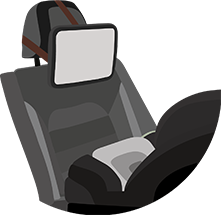
There are many accessories sold to be used with car seats. While many of them seem like good ideas there is risk in using them. Unless they have been specifically tested in crash scenarios they may not be safe for your child during a crash.
Mirrors mounted to a head rest could come off and hit the child.
Strap covers that keep the strap off the child’s skin may allow the child to slip out in a crash.
Pillows and inserts might prevent the child from being properly strapped into the seat.
The child seat manufacturers often offer their own strap covers and inserts that have been tested and are verified to be safe for use with that car seat.
Harness
The 5-point harness is used to hold the child into the car seat. Improper harness usage can be very dangerous for a child. Below are some tips for harness usage.
Many seats have multiple slots that the harness can be routed through for different size children.
The straps should not be twisted.
When clicking the buckles together, tug on them to ensure they are fully clasped.
The harness is too loose if you can pinch the strap and fold it on itself.
The retainer clip should be level with the child’s armpit.
If the harness is frayed or damaged, do not use it. Call the manufacturer to get a replacement harness.
Winter coats are so bulky that they prevent the child from being properly secured in a harness. Pre-heat the car and dress the child in non-bulky clothing.
Tethers
By law, most vehicles are required to have the LATCH system built into the car to accommodate children’s car seats. The tether anchors are usually found somewhere behind the car’s seat that the children’s seat is installed on. They can be directly on the back of the seat, on the ceiling, or in the cargo area. They are usually marked with a tether icon to help installers locate them. Tether symbols will look similar to the icon below.
The tethers are used along with the strap/seat belt that is holding the child’s seat into the car. They help to prevent the top of the car seat from swinging forward during a crash. It is best practice to use the tether whenever possible, regardless of if a belt or lower anchor is being used for the seat.
Combination seats will likely have a tether that is not to be used when installed rear facing. Unused tethers have storage locations built into the seats.
Installation
Installing a car seat correctly can be very tricky. Improper installation can lead to serious injury. Below are some tips to help you have a better installation.
Always read your instruction manual.
Child Passenger Safety Technicians are professionally trained seat installers. Many fire departments and children’s hospitals have CPSTs available to help you install your seat. Call them to be directed to assistance.
Make sure the seat is set up appropriately for the child’s size. Many seats have adjustable headrests and multiple harness paths to better fit children.
The routing of the seat belt or lower anchor strap may have multiple options for rear and forward facing. Check the manual to make sure it is correct. Many seats inadvertently get installed with the strap in the wrong path which can lead to serious injury or death.
Most seats have incline markers. Be sure the seat is within the acceptable range.
If installing with the car’s seat belt, make sure that the strap is in the locked mode. Most belts will lock if pulled all the way out.
A properly installed seat should not be able to be pulled side to side in the car more than one inch. If it can, further tighten the lower anchor strap or seat belt.
The children’s car seat should not touch the seat in front of it.
If the harness, lower anchor strap, tether, or seat belt is frayed or damaged, DO NOT USE IT!
Lower Anchors
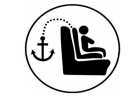
By law, most vehicles are required to have the LATCH system built into the car to accommodate children’s car seats. The lower anchors are usually found in the bottom of the back support of the rear seats. The anchors can be found by looking for the lower anchor symbol.
Children’s car seats can be installed using the lower anchors or the car’s seat belt. Both methods are required to be tested by manufacturers to ensure safety, and either method is fine. It is up to the installer to decide which they would prefer to use. Some innovations in car seat technology have made it much easier to properly install a car seat with the lower anchors rather than the car’s seat belt. If using a seat belt, most children’s seats have a storage location for the lower anchor connectors.
Regardless of the method chosen, all car seats should be tightened down to the point that they are unable to be pulled side to side more than an inch at the attachment point.
Carrier Base
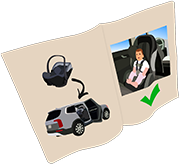
Most infant carriers are sold with a base. The base can be installed in the car and left there. The carrier can then quickly be installed or removed from the base without disturbing the baby. Manufacturers sell additional bases without the carrier to be used in additional cars for multi-car families, grandparents, babysitters, etc.
Brand Name - Carrier base
List Price: $ xxxx
Age Range
0 - 8 yrs
Height Range
12 - 60 inches
Weight Range
0 - 100 pounds
Product Description
Lorem ipsum dolor sit amet, consectetur adipisici ng elit, sed do eiusmod tempor incididunt ut labore et dolore magna aliqua. Ut enim ad minim veniam, quis nostrud exercitation ullamco laboris nisi ut ali
Lorem ipsum dolor sit amet, ectetur adipisicing elit, sed do eiusmod tempor incididunt ut lab
Favorite this seat
Brand Name - Carrier base
List Price: $ xxxx
Product Description
Lorem ipsum dolor sit amet, consectetur adipisici ng elit, sed do eiusmod tempor incididunt ut labore et dolore magna aliqua. Ut enim ad minim veniam, quis nostrud exercitation ullamco laboris nisi ut ali
I’m a father who has worked in the car seat industry as a compliance engineer (oversaw the testing of car seats). I’ve also spent multiple years as a Child Passenger Safety Technician (registered car seat installer) helping parents keep their children safe. After the birth of my daughter, my in-laws asked what seat they should get. I looked for a guide that would help them understand the differences and was disappointed at the lack of information available to new parents. I decided to make my own.
All of the icons on this page are clickable and will bring up informational popups, just like the one you’re reading now. The information in the popups is designed to clear up the confusion about the variety of car seats and the methods of using them to keep children safe.
There is also a section at the bottom that can be used to find car seats that are appropriate fits for the child in your life. Just enter your child’s stats and let the website do the rest.
Travel System
A travel system is a bundle that typically consists of a stroller, infant carrier and carrier base. The base is mounted into the car, and allows for the infant carrier to quickly be inserted and removed without needing the child to be unstrapped from the harness. In most cases, the carrier can also be quickly attached and removed from the stroller.
It is a great option for expectant parents of a first child, as it is a single purchase that handles the majority of an infant’s transportation needs. Additional bases can be purchased individually for use in other cars. If money is a concern, infant carriers are also designed to be installed without a base.
Infant Carrier
Infant carriers are great options for children under the age of two. They are designed to be easily installed and removed from the car with the child in the seat. This allows the parent to secure them in the seat outside of the car, making it much easier.
Infant carriers can be installed with just the car’s seat belt or with an optional base. Additional bases can be purchased individually for use in other cars. If money is a concern, some infant carriers are also sold without a base.
When not in the car, the carrier can be used to keep the child comfortable and secure running errands or while dining.
Convertible seats
Convertible car seats are designed to fit children from birth until about 6 years old. They can be installed rear-facing for younger children and then turned to forward-facing as the child grows. They are meant to be long lasting and often have features such as a headrest and padding that is adjusted to grow with the child.
Some convertible seats are even able to be used as belt positioning boosters for when a child is too large for the 5-point harness, extending the use past age 6. These ones are marketed as “All-in-one” seats and can protect a child until they are big enough to use the car’s seat belt without a child seat.
Combination seats
Combination seats are for children about 4 years old and up. They are forward facing seats that offer a 5-point harness until the child is big enough to use the seat belt. At that point, the car seat belt routes on the seat, ensuring the child is protected.
Booster seats
Booster seats are for children that have outgrown 5-point harness seats but aren’t yet big enough for the seat belt alone. They are designed to raise the child up and ensure the belt is routed in across the pelvis. Children that stop using a booster too soon risk serious damage to internal organs if the seat belt is on their stomach.